
The TMM Method for Headaches and Migraines

Do you have persistent, recurring headaches that seem to be caused or exacerbated by tight muscles or poor posture?
Most headaches we see are not random — they follow clear, predictable patterns driven by muscle tension, joint restriction, and nerve irritation. Phones, desks, screens, driving, and past injuries all contribute to the load placed on your head, neck, shoulders, and rib cage.
At The Muscle Mechanics, we identify and treat the structures actually driving your symptoms — which is why many of our clients experience immediate relief, along with reduced or resolved headache frequency and intensity over a series of treatments.

Why do we achieve such incredible, consistent results?
Because we don’t guess — we assess, target, and thoroughly treat the structures driving your symptoms.
The TMM Method is grounded in a detailed understanding of biomechanics and anatomy, combined with highly precise hands-on assessment of tissue behaviour.
Assessment: We start by understanding your symptom history, injury history, and the factors that aggravate or relieve your condition. We assess your posture, movement patterns, workload, and goals, and discuss your preferences for treatment — including pressure and whether you’re open to techniques such as dry needling or cupping.
Individually Tailored, Hands-On Treatment: Our expert therapists use a range of manual therapy techniques to rapidly relax hypertonic (clenched) muscles, improve fluid flow, enhance fascial elasticity, and downregulate the nervous system.
A key component of our hands on work: assess tissue quality and identify the muscles driving your symptoms. Through skilled palpation, we detect subtle differences in tension — similar to the difference between a raw and cooked steak, though more refined — allowing us to accurately target the correct muscles. No technology or machine can do this!
Instant Relief: Tension through the muscles and fascia of the neck, jaw, and face is our first priority to assess and treat for headaches and migraines. Shoulder posture and rib cage mechanics are also key contributors.
As these muscles relax, many clients experience immediate relief. Muscles typically don’t tighten again without a reason — which is why identifying and addressing the underlying drivers is key.
Ongoing Care: Once we’ve identified the contributing muscles and movement patterns, we provide targeted guidance on ongoing treatment, along with tailored stretching and strengthening where needed to support long-term results.
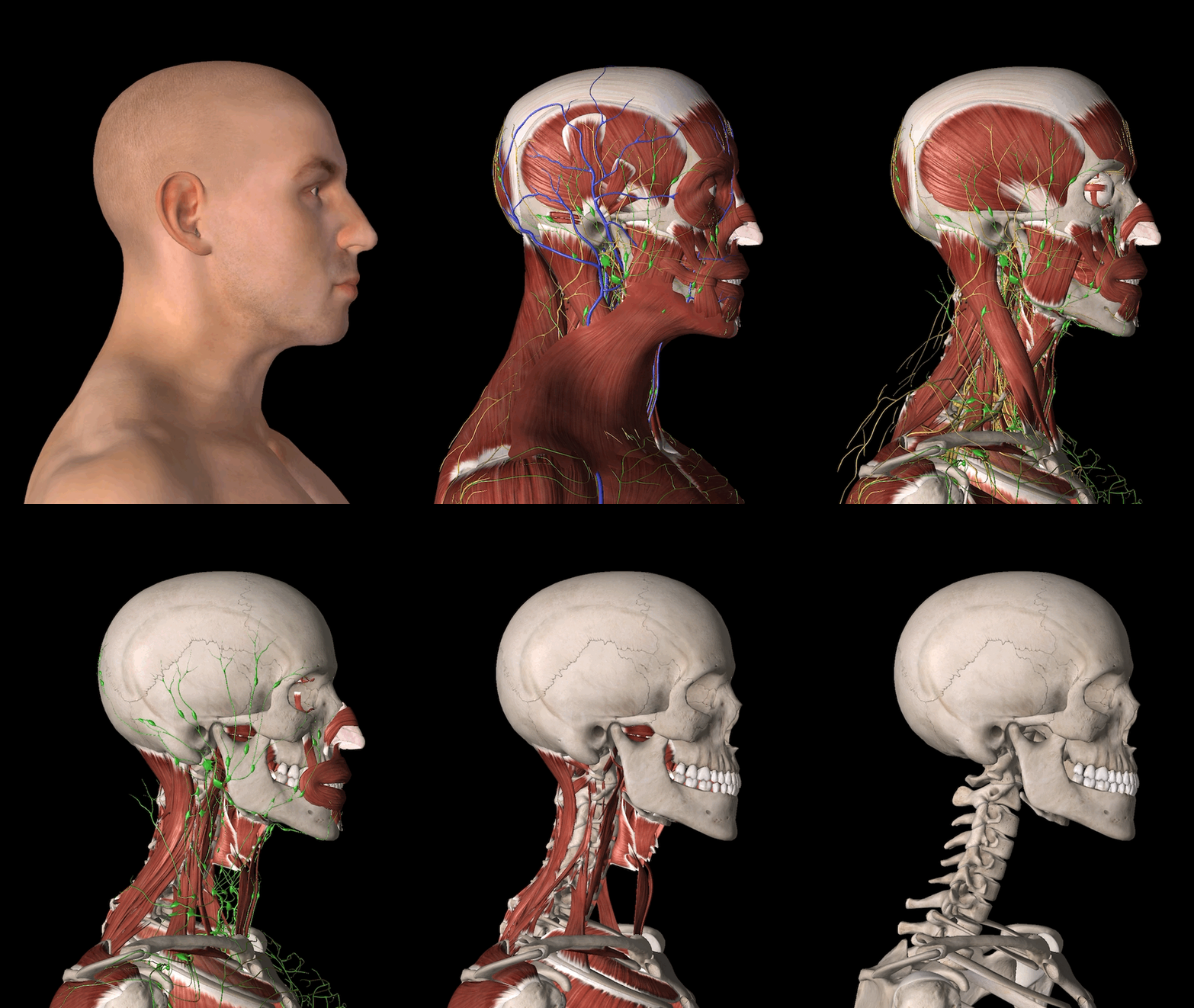
Common Causes of Headaches and Migraines
1: Muscle Tension
Injury, poor posture, or workload exceeding capacity can cause muscles to become tight (hypertonic), this tightening can last days, months, or even years.
Injury (or perceived threat)= muscle clenches as an “inhibitory mechanism”
Poor posture= muscle gets “stuck in” a shortend position
Workload exceeding capacity= muscle clenches as an “inhibitory mechanism”
These hypertonic muscles now pull on their attachments, which effects our biomechanics, often with a negative effect on efficiency and symptoms.
The hallmark symptoms of tight muscles are:
Tightness, stiffness, “knotty” feeling
Dull, aching pain
Heaviness or fatigue in the area
Tender to massage
Referred pain (often it’s the weaker muscle opposing the tight muscle that is symptomatic)
2: Joint and Fascia Restriction
Tight muscle fibres, injury, poor posture, or workload exceeding capacity can cause joints to become compressed and connective tissue to lose elasticity. There is growing evidence that connective tissue can slowly contract as a response of the nervous system.
The hallmark symptoms of joint restriction are:
Sharp or pinchy pain with specific movements
A feeling of being “blocked” or stuck
Clicking, cracking, or grinding
Reduced range of motion (often in one direction)
Pain at end ranges of movement
Deep, localised discomfort
3: Nerve Irritation
Tight muscles, joint compression, injury, poor posture, or workload exceeding capacity can increase sensitivity in the nervous system and irritate nearby nerves. When nerves become sensitised, they can produce symptoms locally or refer pain into other areas.
The hallmark symptoms of nerve irritation are:
Sharp, shooting, or electric pain
Tingling or pins and needles
Burning sensations
Numbness
Pain that travels (e.g. neck → head, jaw → face)
Increased sensitivity to touch or pressure
4: Inflammation, or Poor Fluid Flow (Blood or Lymph)
Inflammation is a natural response to injury or stress, designed to protect the body and support healing. However, when this response persists longer than necessary, it can become chronic. In medical terms, this is often described using suffixes such as “-itis”, “-osis”, or “-opathy” (e.g. bursitis, fibrosis, or tendinopathy).
Muscle tension and joint restriction → disrupted biomechanics → repeated stress on tissues → inadequate blood flow and lymphatic drainage → chronic inflammation
How we address chronic inflammation at The Muscle Mechanics:
Restore efficient biomechanics by releasing tight muscles and fascia through targeted, hands-on manual therapy
Apply specific techniques (such as needling, cupping, and deep tissue work) to stimulate a controlled inflammatory response and help restart the healing process
Improve blood flow and lymphatic movement through hands-on treatment, reducing congestion and supporting tissue recovery
The hallmark symptoms of inflammation and poor fluid flow are:
Constant, throbbing or aching pain
Swelling or puffiness
Warmth in the area
Stiffness (especially in the morning)
Slower recovery
A feeling of heaviness or congestion